


From Bitcoin to CryptoPunks: The Evolution of NFTs
This page credits what each early contributor actually introduced, in the order they introduced it. It is not a list of claims to be the first NFT; for that, see Early NFT Claimants, Examined.
The line runs from Bitcoin through Namecoin to Ethereum. Counterparty is left out on purpose: its assets are not defined or enforced by any blockchain, so they belong to no step in this history. The reasons are in Counterparty Is Not a Blockchain and in Early NFT Claimants, Examined.
-
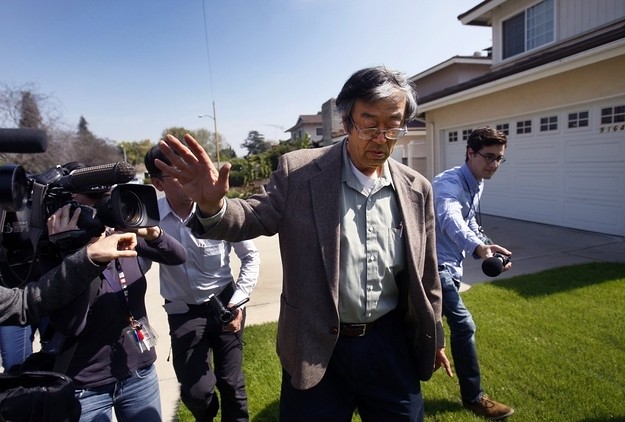
Not Satoshi Nakamoto Bitcoin 2009
Satoshi Nakamoto
A ledger nobody controls. Who owns what is decided by the network’s own rules, not by a bank, a company or a database administrator. Every NFT depends on this idea.1
-

Namecoin April 2011
Vincent Durham (“vinced”), building on ideas from appamatto, Satoshi Nakamoto and Aaron Swartz
Unique things on a blockchain, not just coins. Namecoin, a fork of Bitcoin, added names to the ledger. Each name is unique, held by one owner and transferable, and the chain’s rules enforce all of it. Namecoin names are the earliest things we know of that meet the technical definition of an NFT. They were built to expire unless renewed, which is why they are not collectible NFTs.2
Vincent Durham, who posted on the Bitcoin forum as “vinced,” created Namecoin from Bitcoin’s code and announced it in April 2011 as “inspired by the bitdns discussion.” That discussion began in November 2010, when a forum member called appamatto proposed BitDNS, a Bitcoin-like chain for names. In the same thread, Satoshi Nakamoto described a way for a separate chain to share Bitcoin’s miners; Namecoin adopted it, as merged mining, in October 2011. In January 2011 Aaron Swartz described a similar name system on his blog. The Namecoin project also credits Theymos, Dan Kaminsky and Zooko Wilcox with ideas that led to it. The developers who took over from Durham, among them Khalahan Henkh, Mikhail Sindeyev, Daniel Kraft and Jeremy Rand, kept it going.2
-


Pictures from a 2014 and a 2015 profile, later put into the “Blockheads” and “Twitter Eggs” collections Onename 2014
Muneeb Ali and Ryan Shea
A person and a picture, tied to a unique blockchain record. Onename registered a Namecoin name for each new user, paid the fee, and wrote the user’s profile into it, including a link to their picture. It made the blockchain profile something anyone could sign up for. The pictures themselves stayed on ordinary web servers.3
Years later, lapsed profiles from Onename and similar services were reregistered and gathered into the Namecoin “collections” sold as Twitter Eggs and Blockheads (see Namecoin).
-
Kevin McCoy, Quantum (2014) Monegraph and Quantum May 2014
Kevin McCoy and Anil Dash
Ownership of an artwork, tied to a blockchain entry. At Rhizome’s Seven on Seven in New York, McCoy registered a Namecoin entry asserting title to his animation Quantum, giving the file’s hash and declaring that “title transfers to whoever controls this blockchain entry.” Monegraph, which McCoy built with Dash, offered the same to any artist. The link between entry and artwork was a convention that people agreed to, not something Namecoin enforced.4
-
Ethereum July 2015
Vitalik Buterin and Ethereum’s founders
A blockchain that runs programs. On Ethereum a contract can define its own assets and its own rules, and the chain enforces them. That made something new possible: an author could create a whole set of items, and the rules for owning and trading them, on the blockchain itself.5
-
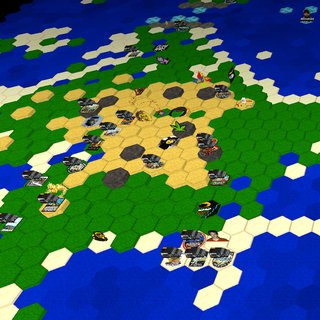
Part of Etheria’s map Etheria October 2015
Cyrus Adkisson
The collectible NFT. Etheria was the first project to put together what the market fell for in 2021: a set of unique items its author created, defined and enforced by a blockchain, owned outright and forever. It meets every hard and soft requirement of the collectible definition. Along the way it introduced:6
- A set its author defined. Each version is a map of 1,089 hexagonal tiles, 457 of them ownable land, fixed by its contract.
- Ownership that never expires and that nobody can take. v0.9 gave its creator no powers over tiles, and the creator powers in v1.0, v1.1 and v1.2 were locked away for good in 2015.
- No two items alike. Every tile has its own place on the map and its own elevation, recorded on-chain, which makes it land or water.
- A whole world on-chain. Ownership, tile names, elevations and the sculptures owners build are all stored on the blockchain, so the shape of the entire world can be rebuilt from chain data alone.
- Building, with rules the contract enforces. In the original 2015 design, owners farmed blocks and placed them on their tiles, and the contract rejected any block that would overlap another, leave the tile, sink below the ground, or float without resting on the ground or another block.
- The first tradable on-chain artworks. The sculptures owners build on their tiles are stored entirely on the blockchain and change hands with the tile, so a buyer gets the artwork itself, not a link or a hash pointing to it.
- A built-in market. In v0.9 and v1.0, buyers make offers that the contract holds, up to ten per tile. When the owner accepts one, the tile and the payment change hands in the same transaction, and the other offers are refunded.
-
CryptoPunks June 2017
Matt Hall and John Watkinson (Larva Labs)
The profile picture. 10,000 pixel-art characters, free to claim, each with its own attributes, some far rarer than others: 9 aliens, 24 apes and 88 zombies among them. Owners began using them as their profile pictures, and the punk became a mark of identity and status. That use helped shape what NFT culture became in 2021.7
CryptoPunks were not the first NFT project, just as Action Comics #1 was not the first comic book. Like Superman, they opened a genre that outshone what came before.
Sources
- Satoshi Nakamoto, “Bitcoin: A Peer-to-Peer Electronic Cash System” (2008); the network started with its first block on 3 January 2009. Emily Siner, “‘Newsweek’ Says It Found Bitcoin’s Founder: 4 Things To Know” (archived), NPR, 6 March 2014 (Newsweek’s claim and Dorian Nakamoto’s denial to the Associated Press). Photo of Dorian Nakamoto: Flickr.
- vinced, “[announce] Namecoin - a distributed naming system based on Bitcoin” (archived), Bitcoin Forum, April 2011; appamatto, “BitDNS and Generalizing Bitcoin” (archived), Bitcoin Forum, November 2010, and in that thread Satoshi Nakamoto’s post of December 2010 (archived); Aaron Swartz, “Squaring the Triangle: Secure, Decentralized, Human-Readable Names” (archived), 6 January 2011; Namecoin, “Team” (archived) (its former developers and “Pre-Genesis” contributors); Namecoin FAQ (archived). Logo: namecoin-graphics, CC BY 4.0.
- Pete Rizzo, “How OneName Makes Bitcoin Payments as Simple as Facebook Sharing” (archived), CoinDesk, 27 March 2014.
- The 2014 Namecoin entry (archived); Cointelegraph on Monegraph, May 2014 (archived); Rhea Myers, “Regarding Quantum” (archived). The animation shown is a reduced copy of quantum.gif from McCoy’s server, the file whose SHA-256 hash the 2014 entry gives. See also Quantum in Early NFT Claimants, Examined.
- Ethereum whitepaper; ethereum.org, “The history of Ethereum” (Frontier, 30 July 2015). Logo: ethereum.org (MIT License).
- Etheria contracts: v0.9, 19 October 2015,
0xe468d26721b703d224d05563cb64746a7a40e1f4;
v1.0, 21 October 2015,
0xe414716f017b5c1457bf98e985bccb135dff81f2;
v1.1, 29 October 2015,
0x169332ae7d143e4b5c6baedb2fef77bfbddb4011;
v1.2, 31 October 2015,
0xb21f8684f23dbb1008508b4de91a0aaedebdb7e4.
Verified source for all four in etheria_source
(building rules in
isValidLocation; offers inmakeOfferandacceptOffer). See also Etheria in Early NFT Claimants, Examined. - CryptoPunks contracts: v1, June 2017 and v2, 23 June 2017; cryptopunks.app (archived). Lucas Matney, “The Cult of CryptoPunks” (archived), TechCrunch, 8 April 2021 (punks as a “digital flex,” “especially when used as an avatar on social media sites”).